


Universal's newest theme park was supposed to give vacationers another reason to visit Orlando. Comcast's latest results show that adding attractions is only part of the challenge.
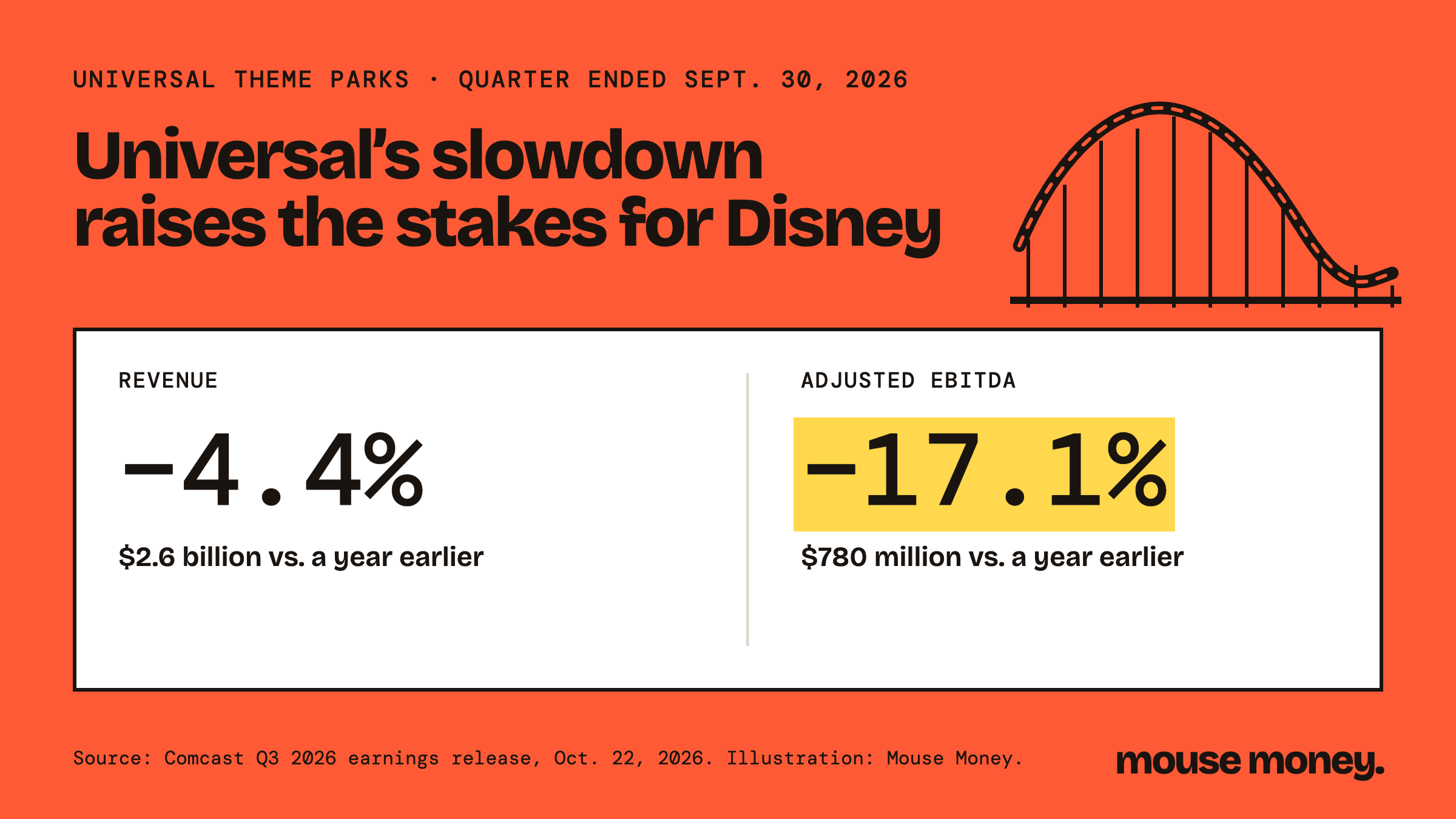
Revenue at Universal's theme-park business fell 4.4% in the quarter ended Sept. 30, while adjusted earnings before interest, taxes, depreciation and amortization dropped 17.1%. Lower admissions revenue, including the effect of increased promotions, met higher operating costs.
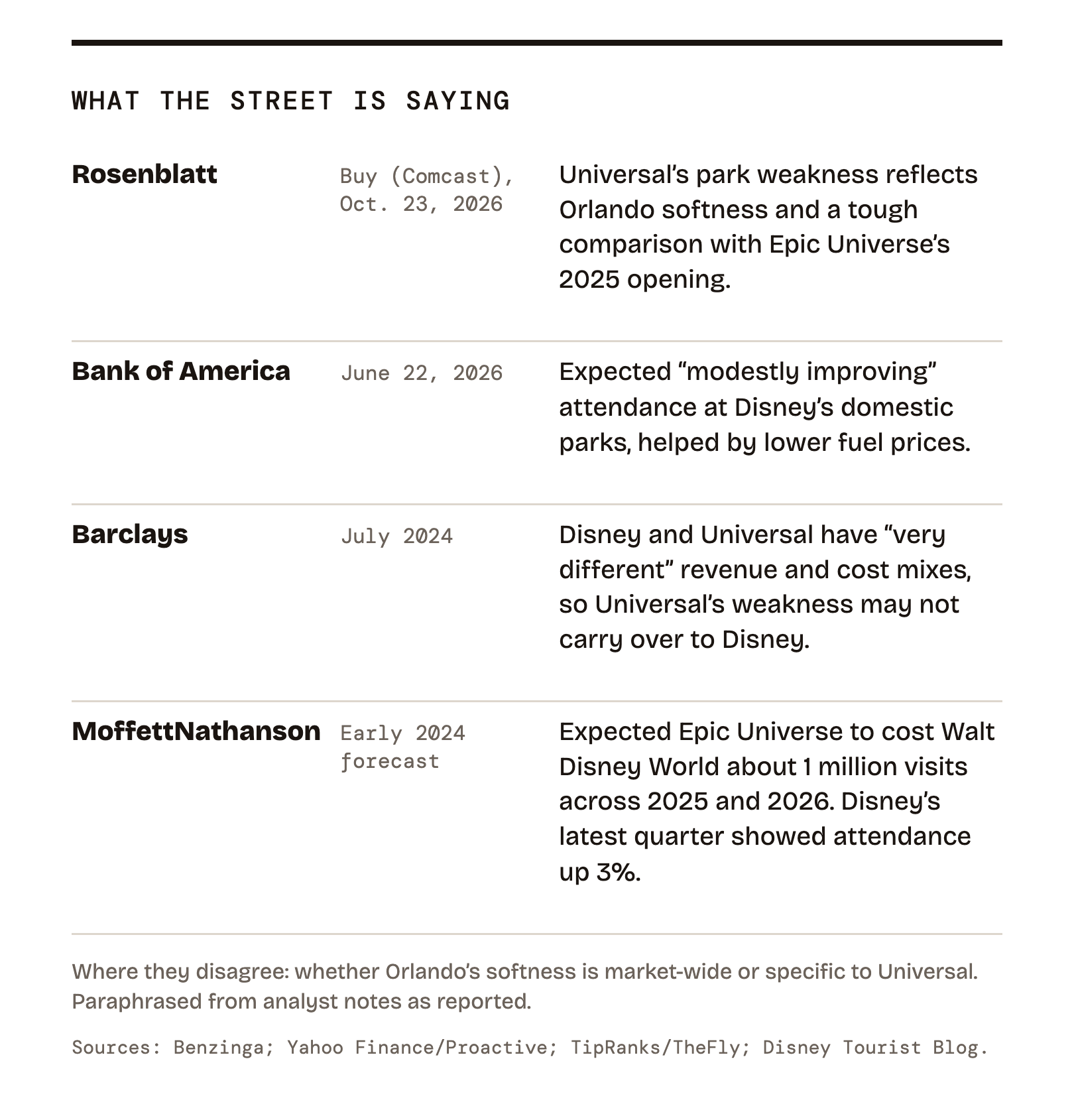
For Disney, those results raise a question rather than settle a contest: Can its parks keep growing as its largest Orlando rival struggles with softer demand and operational problems?
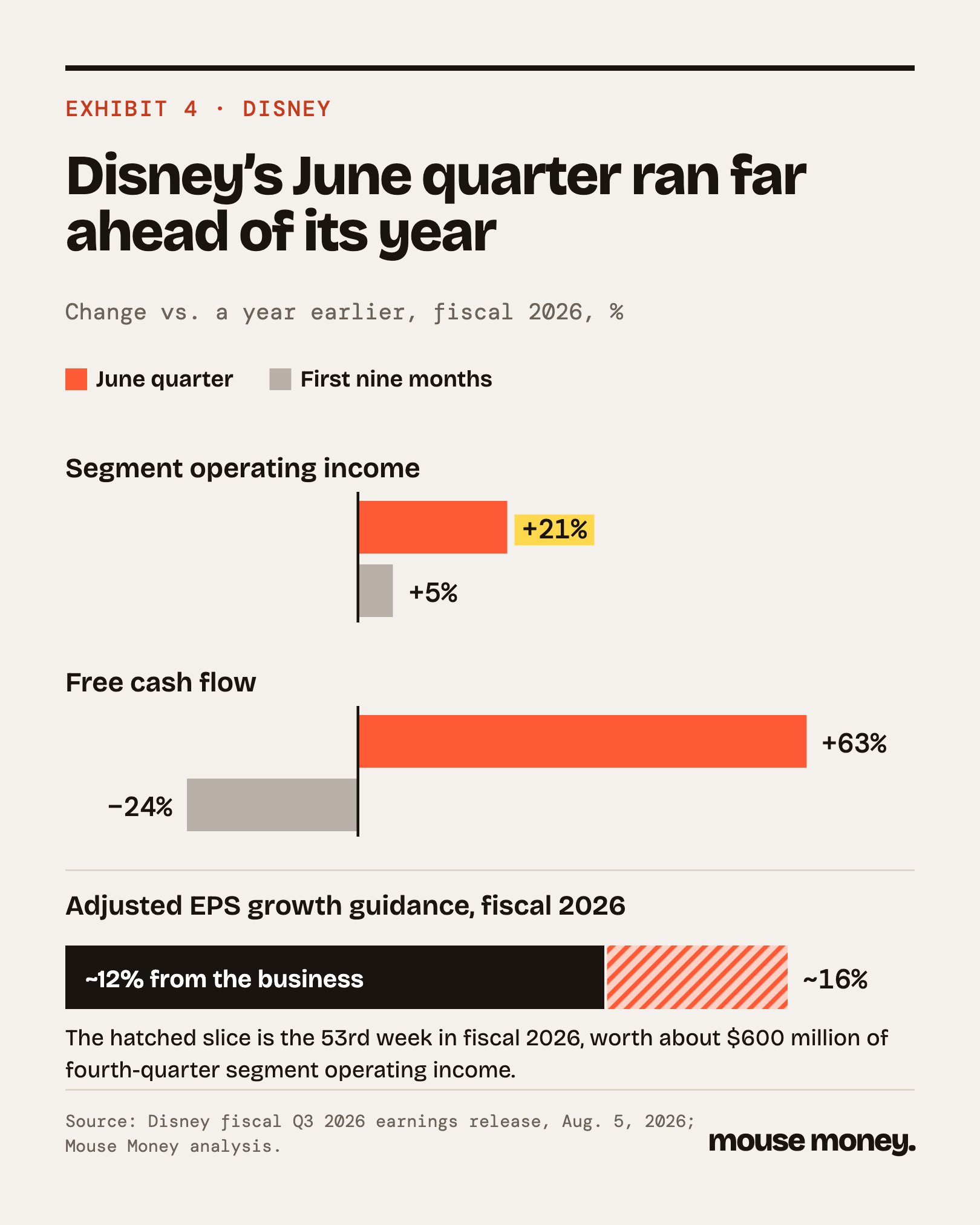
Disney's most recent results were stronger. But they cover an earlier period, and its Experiences business includes cruises and consumer products as well as parks. Declaring a winner now would get ahead of the evidence.
A New Park, Familiar Constraints
Comcast executives identified two problems beyond broader economic and geopolitical pressures. Competitors responded more quickly to weakening demand, and Epic Universe continued to face constraints on ride capacity and the number of guests attractions can accommodate.
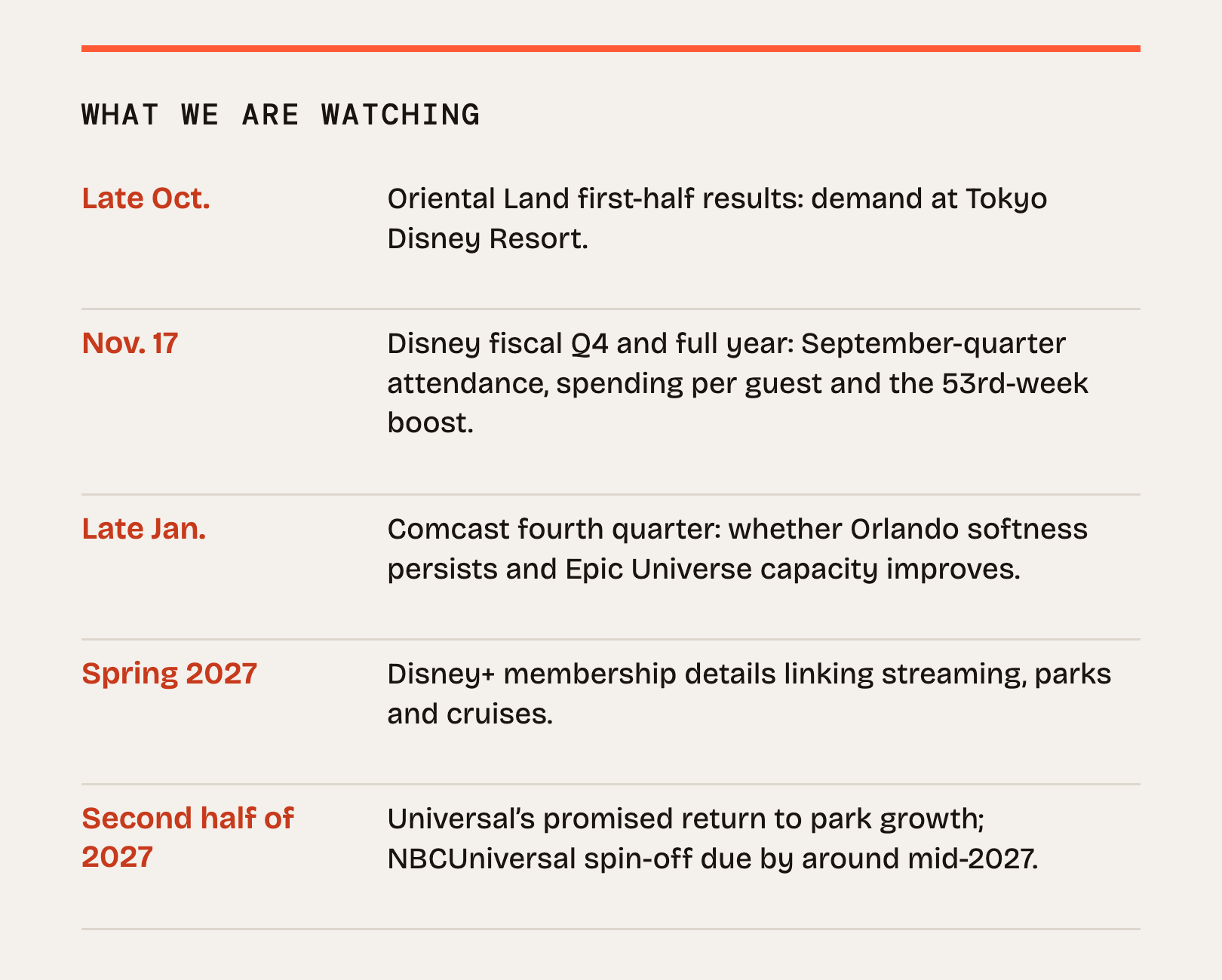
Management expects Orlando's softness to persist through at least the first half of 2027. It is responding with promotional packages and work to improve attraction reliability and loading times.
There is a counterpoint: Executives said Orlando attendance, guest spending and overall financial performance remained materially above their levels two years earlier. The current decline follows a substantial expansion of the business.
That distinction matters. A difficult comparison after a new park opens does not establish that the investment has failed. It does expose the demands of operating a larger resort: attracting enough additional visitors, getting them onto rides and generating enough revenue to cover the added expense.
Building capacity and earning an adequate return on it are separate achievements.
What Disney's Results Actually Show
Disney reported a 3% increase in domestic park attendance in its quarter ended June 27. The company credited attendance growth among domestic tourists and annual passholders at Walt Disney World, alongside summer promotions and new experiences.
Those results complicate a simple narrative in which Universal needs discounts while Disney relies on brand loyalty. Disney uses promotions, too. The relevant question is whether those offers generate enough additional business to justify their cost.
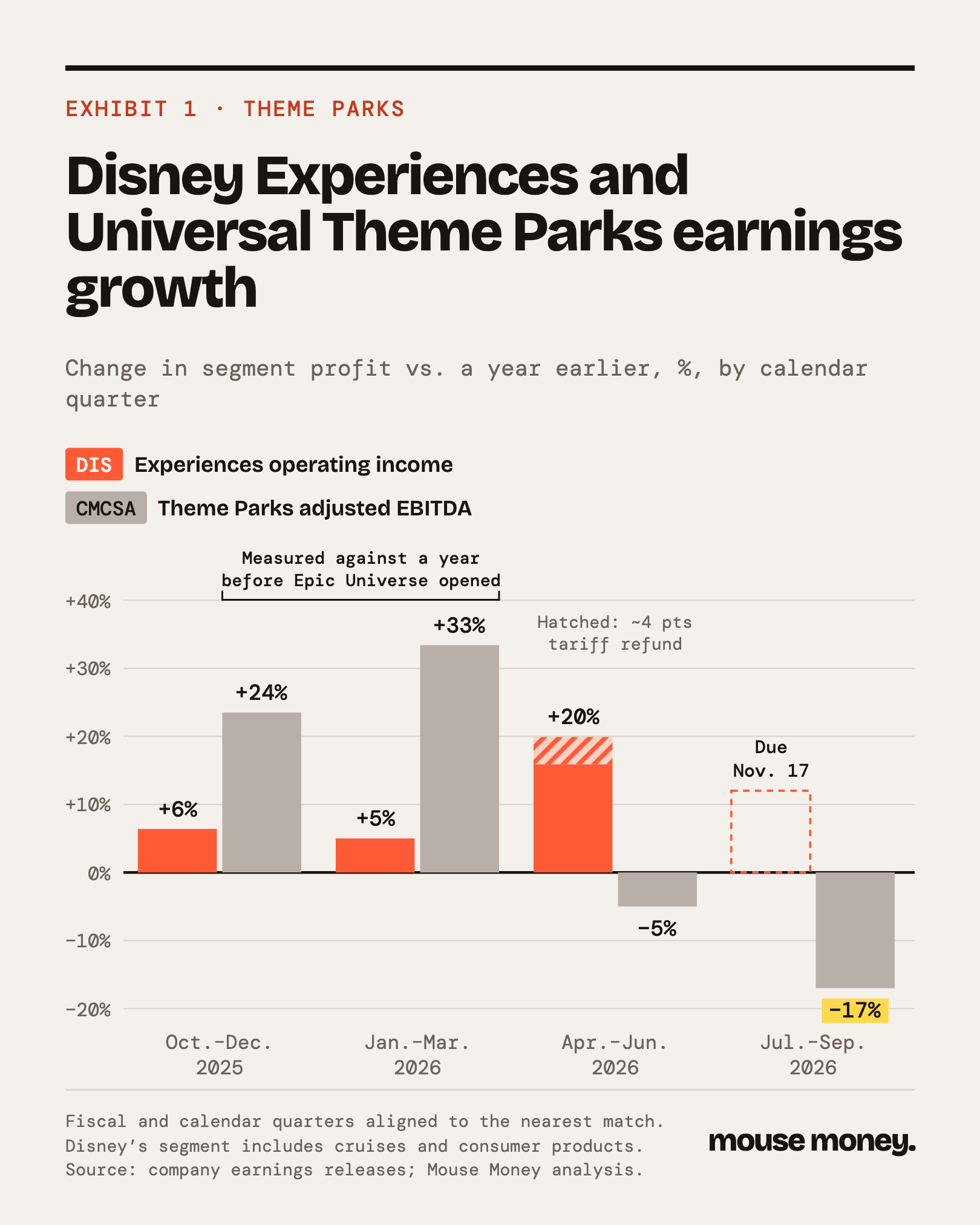
Nor did Universal's difficulties begin only in the September quarter. In the preceding quarter, its theme-park revenue increased 2.7%, but adjusted EBITDA fell 5.1% as expenses grew faster than revenue. Epic Universe was contributing to Orlando's sales growth while the broader parks business faced pressure on earnings.
That makes the comparison with Disney worth watching. It still does not establish that Disney captured visitors who otherwise would have gone to Universal.
The two companies report different businesses using different profit measures. Disney's cruise expansion also adds a source of growth that Universal's parks segment does not share. A chart comparing their segment earnings should make those differences explicit.
Why the Rest of Comcast Matters
Parks were one part of an uneven quarter for Comcast.
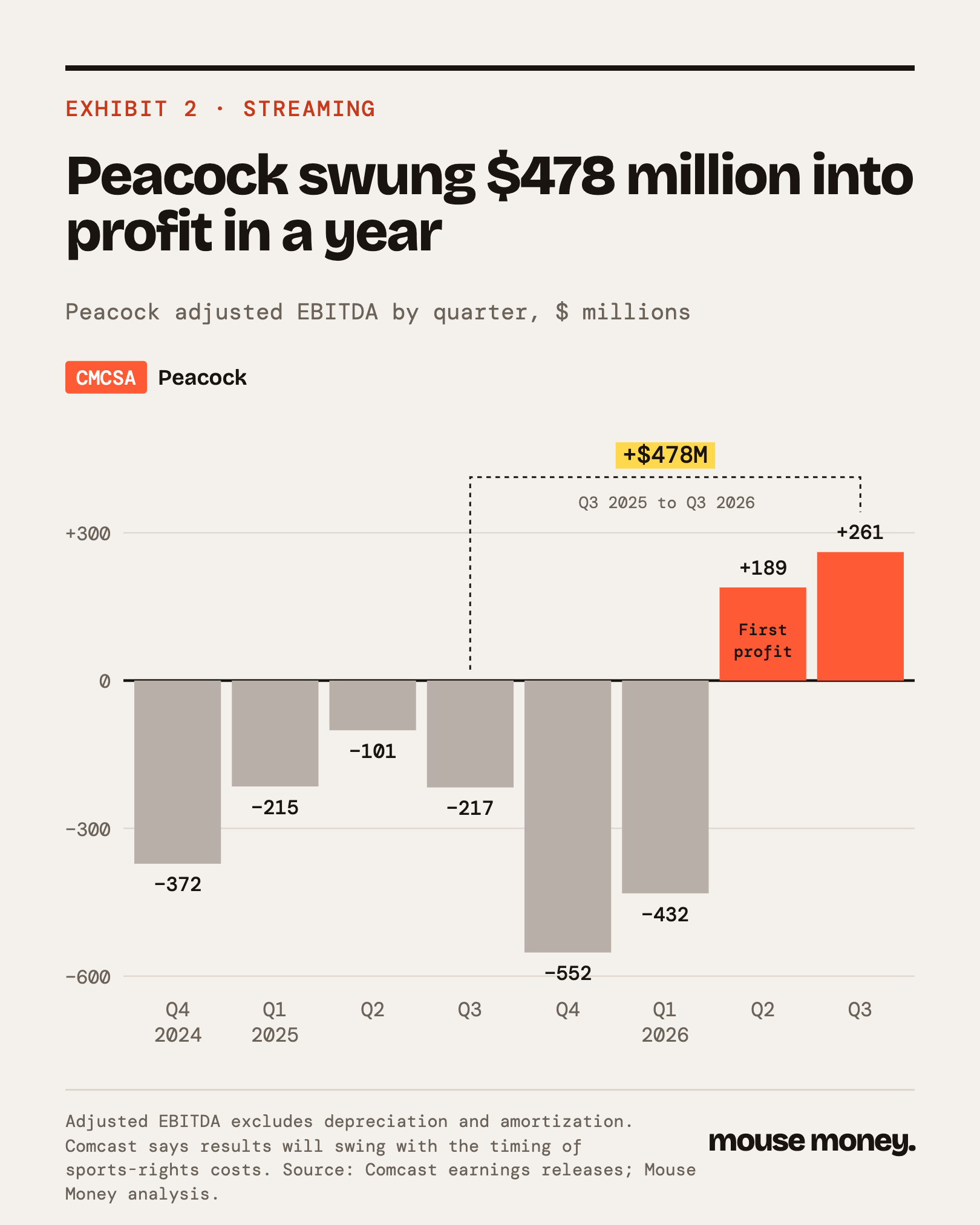
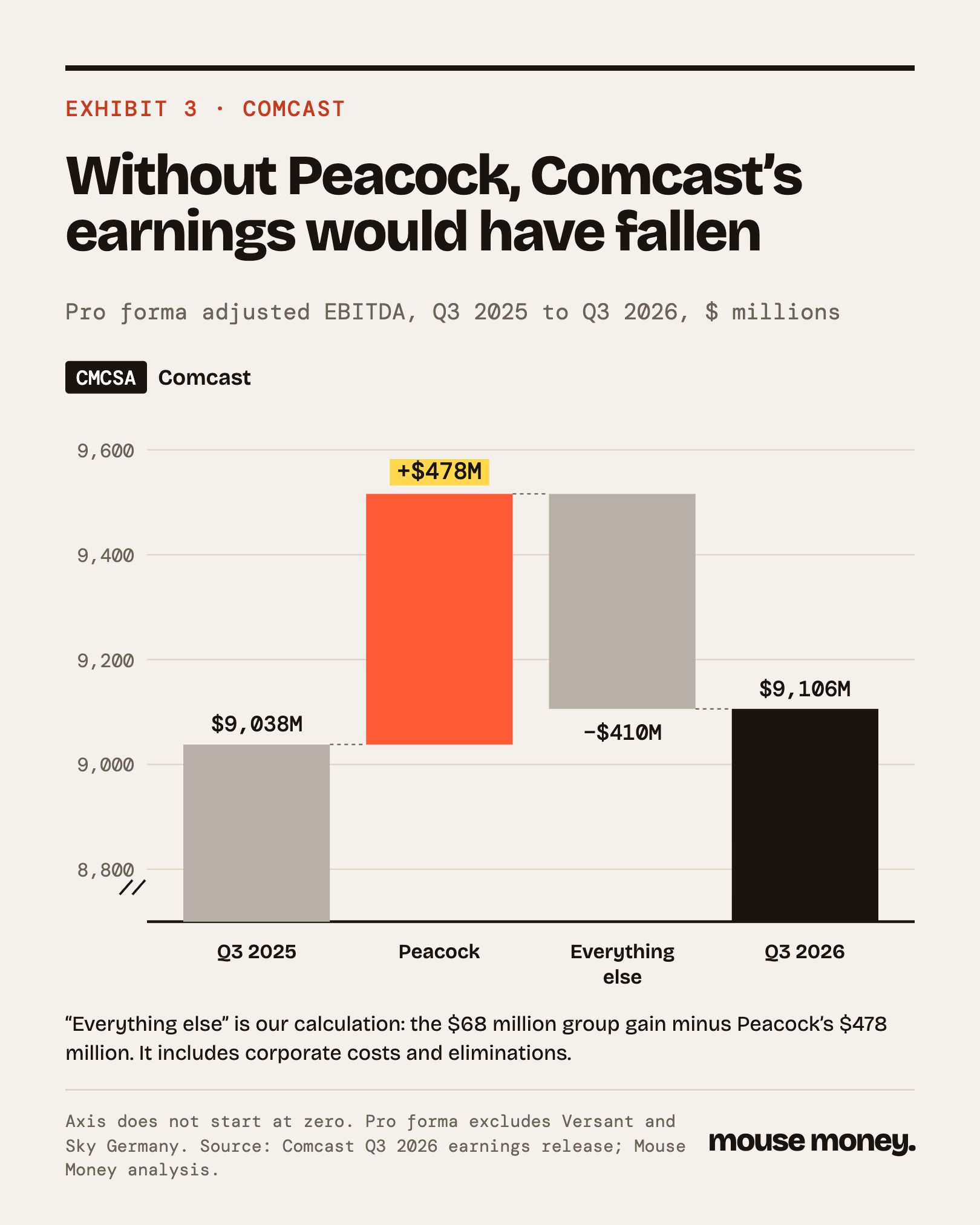
Peacock generated $261 million in adjusted EBITDA, compared with a $217 million loss a year earlier. That $478 million improvement exceeded the company's $68 million increase in consolidated pro forma adjusted EBITDA.
Subtracting Peacock's improvement implies that the remainder of Comcast, including corporate costs and consolidation adjustments, deteriorated by about $410 million on that basis. The calculation illustrates Peacock's growing contribution; it is not a separately reported company measure.
The result also cautions against treating a diversified entertainment company as a single business moving in one direction. Streaming can improve while parks weaken. A successful film slate can coexist with pressure elsewhere.
For Disney, the attraction of owning franchises is the ability to earn revenue from the same characters across films, streaming, merchandise and vacations. That creates opportunities to spread investment across several businesses. It does not remove the need for each new film, attraction or ship to earn a return.
The same discipline applies to efforts to connect those businesses more closely. Cross-promotion is valuable when it changes customer behavior profitably. A discount on a vacation a family would have booked anyway is a different proposition from winning an additional trip.
The Next Test
Disney's next report, on Nov. 17, will provide a more current view of demand and help narrow the timing gap with Comcast's results.
Investors should distinguish growth from new capacity, growth from existing operations and any benefit from fiscal 2026's extra week. Disney's outlook calls for approximately 16% adjusted earnings-per-share growth including that week, compared with approximately 12% excluding it.
For parks, attendance alone will not answer every question. Higher visitor numbers can coexist with heavier promotions or rising costs. Revenue and earnings need to show what the additional business is worth.
Universal's slowdown demonstrates how quickly the economics can become harder when demand weakens and operating expenses rise. Disney's earlier results offer reasons for confidence, but they cannot establish how its parks performed through the same summer.
The question is how much profitable demand either company can create for the capacity it has built.
Sources
Disney Q3 fiscal 2026 earnings call transcript (The Motley Fool)
Disney Investor Relations, Oct 2026: Fiscal fourth-quarter and full-year 2026 results webcast
Yahoo Finance/Proactive, Jun 2026: Bank of America on Disney attendance
TipRanks/TheFly, Jul 2024: Barclays on Comcast's park weakness and Disney
Disney Tourist Blog: MoffettNathanson's Epic Universe attendance estimate
It's a difficult spot to be in for Universal. The underlying question is whether increasing attendance volume via promotions is truly a cure-all, considering that EBITDA margins are seeing the most compression in this environment!